
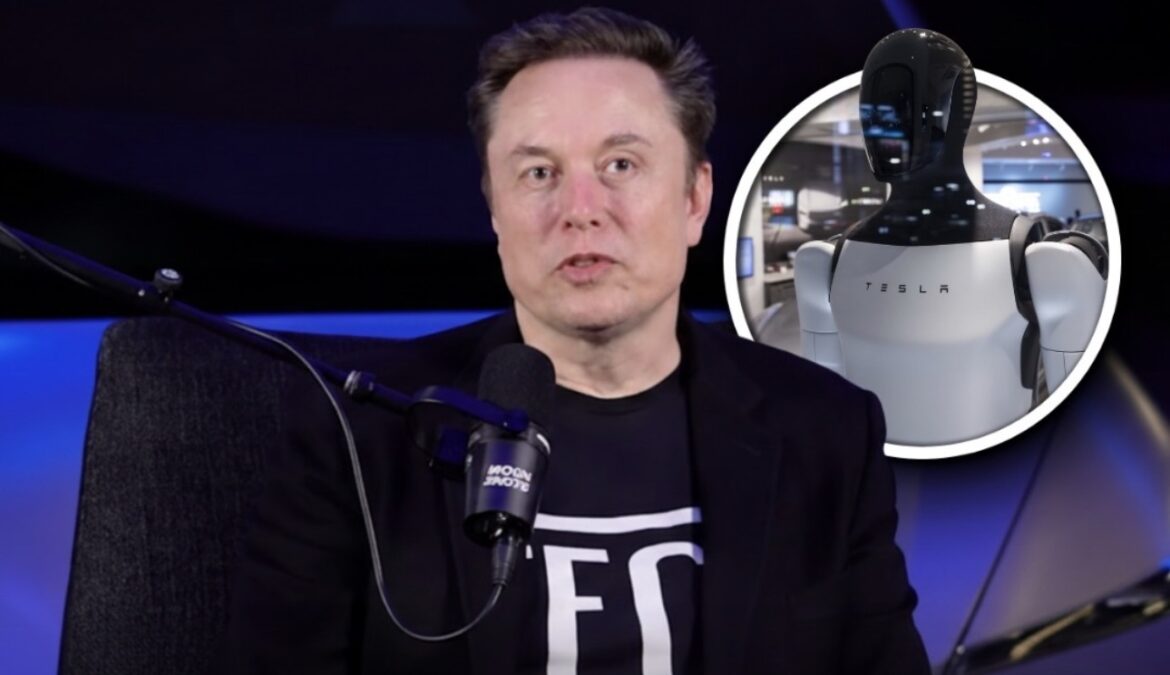
SILICON VALLEY – Tech mogul Elon Musk has once again ignited a firestorm of debate within the educational and healthcare sectors, this time declaring that pursuing a traditional medical degree is becoming “pointless” due to the rapid advancement of Artificial Intelligence and robotics.
During a series of recent interviews and podcast appearances in early 2026, the Tesla and xAI CEO argued that the trajectory of medical technology suggests a future where human intervention in physical procedures will be obsolete. Musk posits that the current timeline of medical education cannot keep pace with the exponential growth of automated systems.
The Case for the Robo-Surgeon
Musk’s primary argument centers on precision and endurance. He asserts that robotic surgeons, powered by advanced AI, are already on a path to vastly outperform human hands in precision-based procedures.
“Humans get tired, their hands shake, and they are limited by their own biological processing speed,” Musk reportedly stated during a discussion credited to futurist Peter H. Diamandis. “A robot does not require sleep, it does not suffer from fatigue, and its precision is absolute.”
Furthermore, Musk highlighted the data advantage. While a human doctor can only learn from the cases they personally witness or study, an AI system can be trained on “vast medical datasets,” effectively instantly learning from every surgery ever performed globally. This, he argues, will eventually make an AI diagnostic tool or surgeon infinitely more knowledgeable than any single human specialist.
Addressing the Global Shortage
Beyond the technical superiority, Musk touched upon the logistics of global healthcare. With a chronic shortage of doctors worldwide, specifically in specialized fields like neurosurgery, Musk suggests that scalable robotics could be the only viable solution to democratize high-level healthcare. Automated systems could theoretically operate 24/7, servicing more patients than humanly possible.
The Counter-Argument: The Human Element
Despite Musk’s confident predictions, the medical community remains skeptical about the total obsolescence of the human doctor.
While the caption from the Uncover AI post notes that AI systems and surgical robots are improving in speed and reliability, most experts argue that medicine is not merely a technical trade. The consensus among medical professionals is that while the role of the doctor will evolve, the need for them will not vanish.
Critics point out that medical practice relies heavily on judgment, ethics, complex problem-solving in ambiguous situations, and, crucially, patient trust. The ability to deliver bad news with empathy, or to make an ethical call when data is inconclusive, remains a distinctly human trait that AI has yet to replicate.
A Hybrid Future?
Rather than a complete replacement, industry analysts predict a shift toward a hybrid model. In this future, doctors may act less as manual operators and more as “architects” of care—overseeing robotic systems, interpreting AI diagnostics, and managing the human relationship with the patient.
As 2026 unfolds, Musk’s comments serve as a stark reminder that the integration of AI into the physical world is accelerating, forcing institutions to rethink how they train the next generation of professionals. Whether medical school is truly “pointless” or simply in need of a radical curriculum update remains the central question of the decade.